It's not what you look at that matter. It's what you see. (H.D. Thoreau)
Would you like to try out meditation or are you an experienced meditator looking for an online group? Then do join one of the monthly online sessions!
Next Online Sessions:
Wednesday 4th of March, 6.30pm GMT/7.30 pm CET (TBC)
All Welcome. Session offered on donation basis. To join, please send an E- Mail to kindtomind@yahoo.com
Sign up to receive notifications about new blog posts.
Online Meditation Group
In addition to teaching in-person retreats, classes and workshops, I host a monthly online meditation group which is open to anyone. You are very welcome to join one or several of the sessions. No previous experience or regular commitment is required.
A typical session consists of a 25-30 minute guided meditation and space for sharing andmutual support afterwards. There is never an obligation to speak. Sessions last for a maximum of 1 hour.
We usually meet on the second Wednesday of each month. Please check the ‘Home’ section for up-to-date information on the next sessions.
If you would like to join one of the online meditations, please send an e-mail to kindtomind@yahoo.com to receive the log in details. The monthly online sessions are offered on a donation basis.
I also regularly offer more in depth online courses over the course of several weeks on specific subjects, for example dealing with stress, nourishing the spirit etc.
If you would like to be informed about upcoming courses please subscribe to my blog or send me an e-mail to the above address.
Mindfulness – More Than a Trend
What is Mindfulness?
Mindfulness means bringing awareness to what occurs inside and outside of ourselves. It can be practiced in formal meditation as well as in situations of daily life, e.g. focusing our attention on the sensations in our hands whilst washing up or being aware of our state of mind when we wake up in the morning.
Mindfulness is not about trying to stop thinking, but learning to not get ‘caught up’ in our thoughts quite so much, remembering that every thought is simply that – a thought. Nothing more and nothing less. As a result, mindfulness can help to reduce stress, worry and anxiety and improve focus.
Challenging thoughts and feelings will occur during practice sooner or later – this is not a sign that we are doing anything wrong. They are as much part of our experience as everything else and so do not need to be ‘pushed away’ when we observe our inner life.
A very liberating aspect of practising mindfulness is the experience of the fleeting nature of thoughts. Every thought, no matter how true or urgent it may seem, will pass sooner or later. In practice we experience this fact directly. Mindfulness can support us when we become stuck in negative or unhelpful thinking loops. When we are ‘caught up’ we perceive our thoughts, states of mind or general situation as ‘permanent’. Practising mindfulness and meditation helps us to experience and see more and more clearly that this is not the case.
Mindfulness has become a real ‘trend’ in recent years. Whilst it is nice to see that the benefits of mindfulness are increasingly acknowledged by science and taught in a secular context, it is important to me to remember that thesepractices are rooted in the Buddha-Dharma (teachings of the Buddha).
Hence, mindfulness is more than just a relaxation technique.
Practising mindfulness has the potential to give much support to the development of insights which contribute to taking steps towards beneficial change in our lives.
Whilst I welcome the increasing interest in mindfulness in a secular context, in my view, mindfulness practice needs to be deeply concerned with ethics and our way of being in this world. A complete secularisation of mindfulness carries the risk of losing sight of key ethical values, such as non-violence and compassion.
What is Meditation?
Meditation has a history that goes back thousands of years, and there are now a vast number of definitions for meditation.
Meditation, no matter how one might define it, is generally practised to support calm, clarity and insight. Meditation is practicing mindfulness in a formal posture: sitting, standing, walking or reclining. Practising meditation can be very helpful in increasing the capacity for mindfulness in daily life situations.
Meditation is not yet another self – improvement tool.
We don’t meditate because there is something wrong with us that needs to be fixed.We meditate to nourish our heart and mind and increase our capacity to meet challenges in a skillful way.
This does not mean avoiding looking at what is unpleasant or what needs to be changed, but doing it in a way in which there is no extra judgement or pressure added.
From a standpoint of increased clarity we can then choose if action is required/possible or if acceptance towards that which we can’t change needs to be practiced.
Why ‘sometimes mindful’? Shouldn’t one be ALWAYS mindful?
It is not possible – nor necessary – for anybody to be mindful in every moment of our life.
The Buddha said: “Mindfulness is applied to the extent necessary in order to abide without needing to lean on anything in the world.”
In my experience, too high goals are one of the most common reasons for people not to continue with the practice, even though they might find it very beneficial to start with.
A view I hear regularly is: “I am not good at meditating because my thoughts drift off.” The fact that thoughts wander during practice is not a sign of being a ‘bad meditator’ – it’s a sign of being human!
I want to encourage people to take small steps and incorporate the practice into daily life as much as possible. Nobody can always be mindful, but small persistent changes can make a big difference to one’s life over time.
My wish is to support people in finding a way of practising which works for them, free from feelings of inadequacy or guilt.
Practising Safely
Even though mindfulness practice includes looking at everything (including that which is unpleasant) it is important to adapt the practice if it feels overwhelming. The practitioner always has the authority to pause or stop a meditation at any given moment. It is no failure to interrupt the practice in moments it doesn’t serve us – on the contrary. Recognizing when it’s time to modify our practice shows wisdom and doing so is a mindful act in itself.
About Me
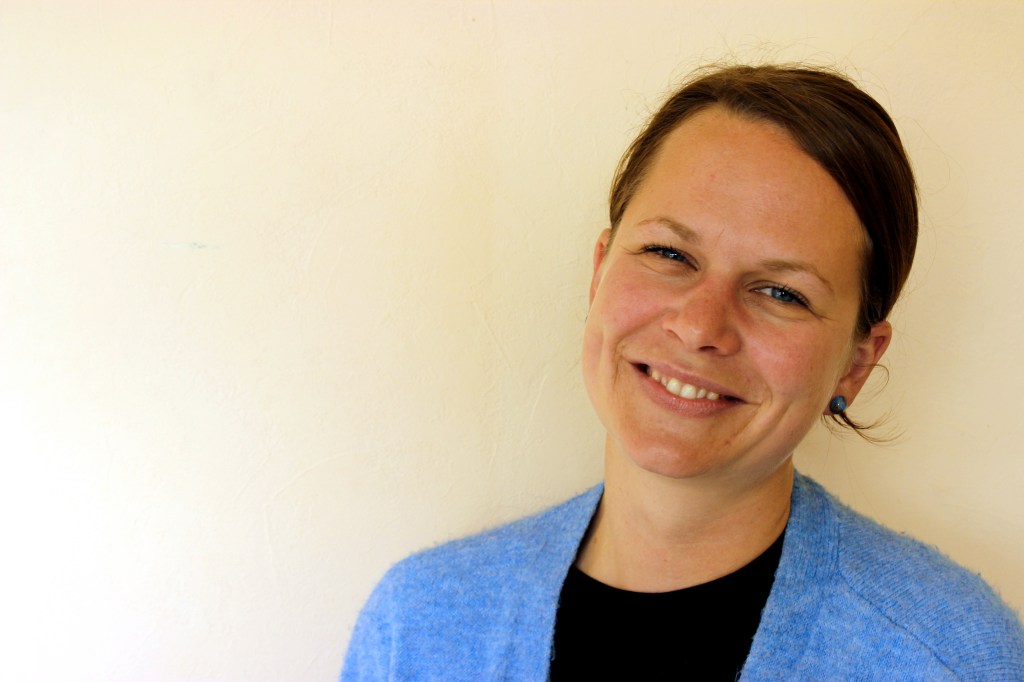
Photo by S.Nitsche
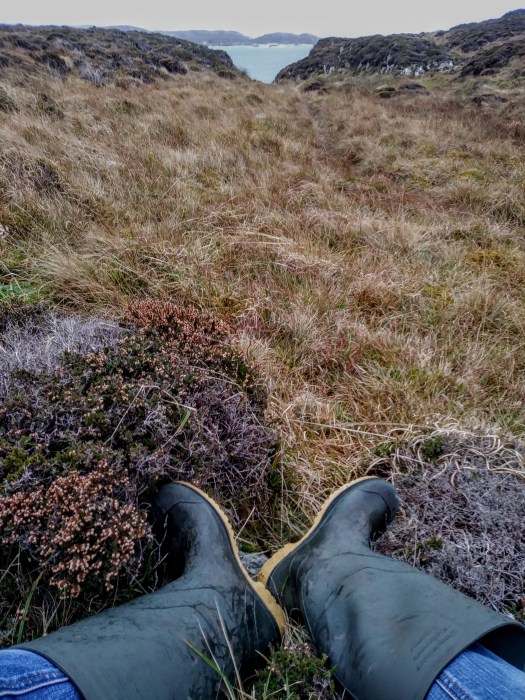
My name is Kerstin Felleiter and I am originally from Germany. I have been living and working in the UK for the last decade of my life -mostly on the remote Isle of Iona on the Scottish West Coast. Currently I am living in a nomadic way, following the Dharma and other passions (e.g. organic growing).
I teach mindfulness classes, day workshops and retreats in person and online.
I am CPD certified to teach mindfulness and have been authorised to teach by senior dharma and mindfulness teachers Christopher Titmuss (UK) and Ulla Koenig (Germany) in 2022.
I draw my main inspiration from the wisdom of Buddhist teachings and feel there is an abundance of beauty and depth to be found across all spiritual traditions.
I have experienced profound benefits and changes in my own life through practising mindfulness. My primary motivation as a teacher is to make a contribution to the wellbeing of others by sharing what I have learned so far on my exploration of these teachings.
I aspire to remain open, curious and undogmatic in my personal practice as well as in my role as a teacher.
Spending much time outdoors and in silence is a major source of nourishment for me.
My Approach
I strongly believe in the healing power of connection. My aim is to create safe spaces for people of all backgrounds to come together to sit in meditation, explore various topics and enable an exchange to happen.
All instructions that are given are invitations, not commands and participants are very much encouraged to listen to signals from their body and make their own choices, e.g. having the eyes open or closed during meditation.
My biggest wish as a teacher is to support people in developing a practice which contributes to calm and clarity, supports them in challenging times and in taking steps to make beneficial changes in their lives.
If you have further questions or would like to join one of my sessions, please send me an e-mail to kindtomind@yahoo.com.
I have spent most of the time since early autumn living, serving and meditating in a Buddhist retreat centre, much of it in silence. I have been here all in all for 3,5 months. As my time at the centre comes to an end, several people have asked me about my experience. Hence I will …
Maybe you’re right. Maybe I should get a proper job, settle down. Grow up, think about health insurance. Oh, and the pension, yes. I’ve just been so busy working out the terms and conditions of my heart insurance. For once I was sensible. Signed a life-long contract. Small print says: requires daily renewal. So I …
Do something radical today. Show up for the crispness of this morning offered so generously to you without a demand in the world. // Delete the word ‘ordinary’ from your dictionary. // Do you really believe this day is devoid of miracles just because it’s porridge again for breakfast? // Amazement is a good swimmer …



 SOMETIMES MINDFUL